
Facial cleansing

Content: 50 Milliliter (€69.80* / 100 Milliliter)

Content: 250 Milliliter (€13.56* / 100 Milliliter)

Content: 200 Milliliter (€19.50* / 100 Milliliter)

Content: 250 Milliliter (€15.96* / 100 Milliliter)

Content: 250 Milliliter (€159.60* / 1000 Milliliter)

Content: 125 Milliliter (€111.20* / 1000 Milliliter)

Content: 250 Milliliter (€159.60* / 1000 Milliliter)
Facial cleansing: Products for cleansing the face, neck and décolleté
Facial cleansing: You want to make sure your skin stays healthy, fresh and radiant.
Proper cleansing is the first step on this journey.
We will introduce you to various methods and products that will help you to cleanse your skin thoroughly and nourish it at the same time.
Find out more about make-up remover, micellar water, cleansing milk and cleansing cream and discover which product is best suited to your skin type.
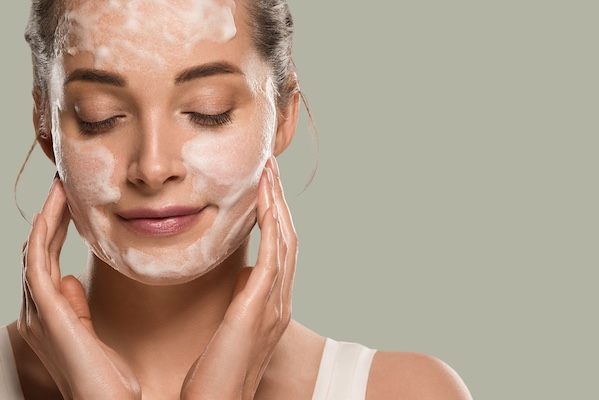
Make-up remover
Make-up remover for clean skin
Thorough facial cleansing begins with the removal of make-up.
It can clog pore openings and lead to skin problems if not removed properly.
Effective removal is therefore essential to rid your skin of the day's residue.
The perfect make-up remover for you
When choosing a make-up remover, you should consider the needs of your skin.
Mild, oil-free formulas are suitable for sensitive skin, while oily skin can benefit from an oil-based make-up remover.
Also note whether the remover can remove waterproof make-up if you use it regularly.
Application tips for make-up remover
To get the most out of your SHO make-up remover, apply it generously to a cotton pad or cleansing sponge and wipe your face.
Start with your eyes to remove mascara and eyeshadow and then work your way to the rest of your face.
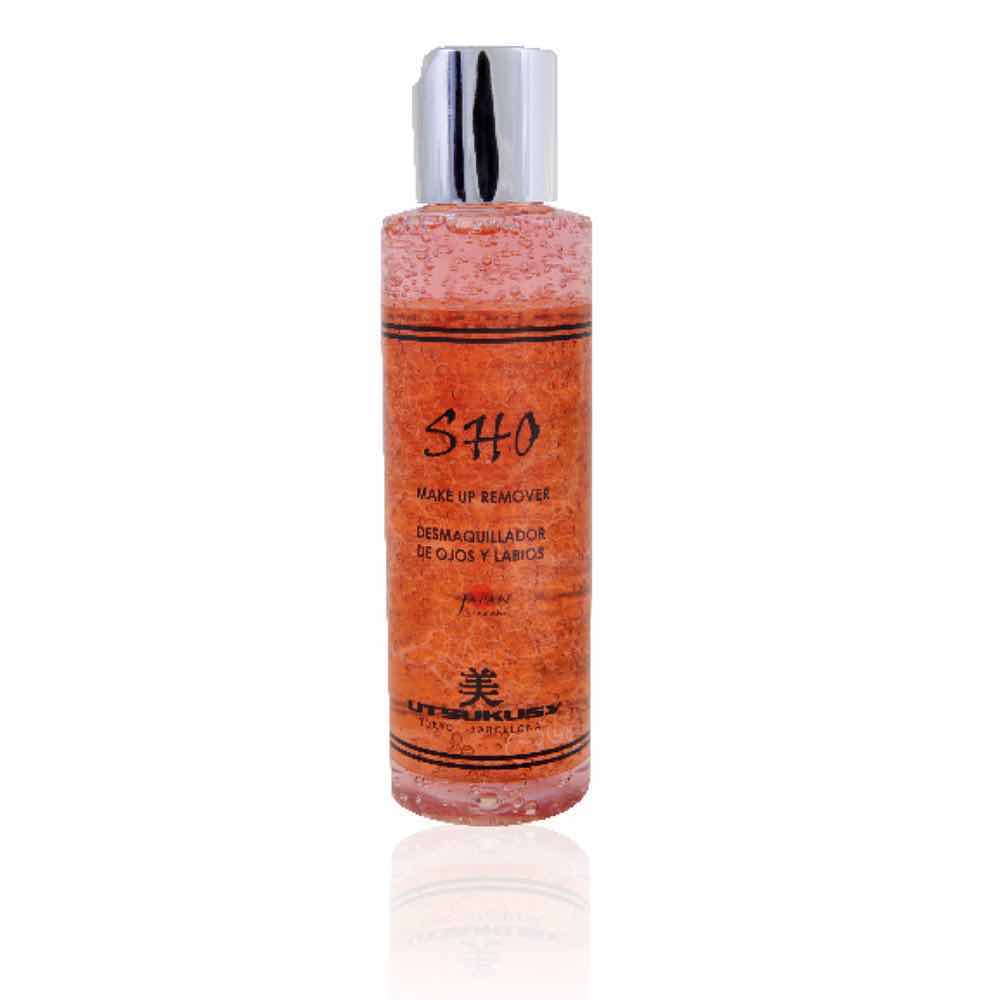
Sho make-up remover from Utsukusy Cosmetics
Cleansing milk - essential for facial cleansing
Cleansing milk - gentle care for your skin
Cleansing milk is a mild and nourishing option for facial cleansing.
It effectively removes make-up and impurities and leaves the skin soft and hydrated.
Find out more about the benefits of cleansing milk and how to use it correctly.
Benefits of cleansing milk
Cleansing milk often contains moisturising ingredients such as aloe vera or chamomile, which nourish and soothe your skin.
It is particularly suitable for dry and sensitive skin.
Cleansing milk is also easy to use and leaves your skin feeling pleasant.
How to use cleansing milk
To use Basic Line Cleansing Milk, apply a small amount to the palm of your hand and gently massage it into your skin.
Then remove with lukewarm water or a damp cloth.
Basic Line Cleansing Milk is suitable for use in the morning and evening.
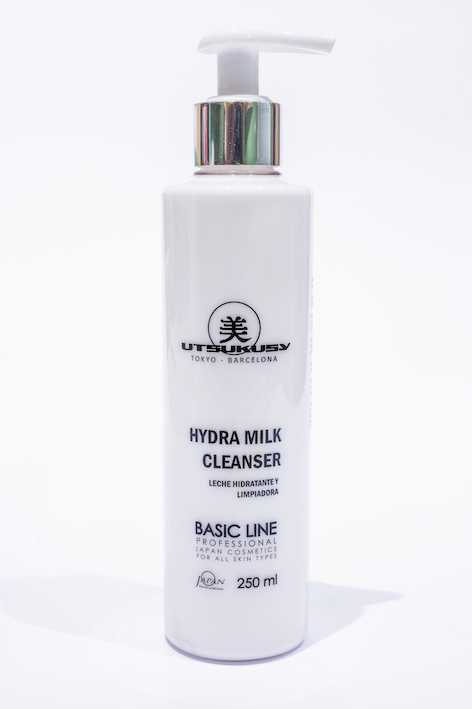
Gentle facial cleansing with the Basic Line cleansing milk from Utsukusy Cosmetics
Facial cleansing cream
Facial cleansing cream - intensive cleansing for demanding skin
Facial Cleansing Cream is a richer option that penetrates deep into the pores and removes stubborn dirt and excess oil.
This product is particularly suitable for oily and blemished skin.
Find out more about the benefits of cleansing cream and how to incorporate it into your facial cleansing routine.
Benefits of facial cleansing cream
Facial cleansing cream is slightly more intensive than cleansing milk and helps to reduce pore blockages.
It often contains powerful ingredients such as salicylic acid or calendula (marigold), which can help treat acne.
Cleansing cream is ideal for oily or blemish-prone skin.
Application of the facial cleansing cream
To use Bijin Facial Cleansing Cream, apply a small amount to your face and massage in gently.
Concentrate on the problem areas.
Then rinse the cleansing cream off completely with warm water.
Facial cleansing cream can be used in the morning and evening, depending on your skin's needs.
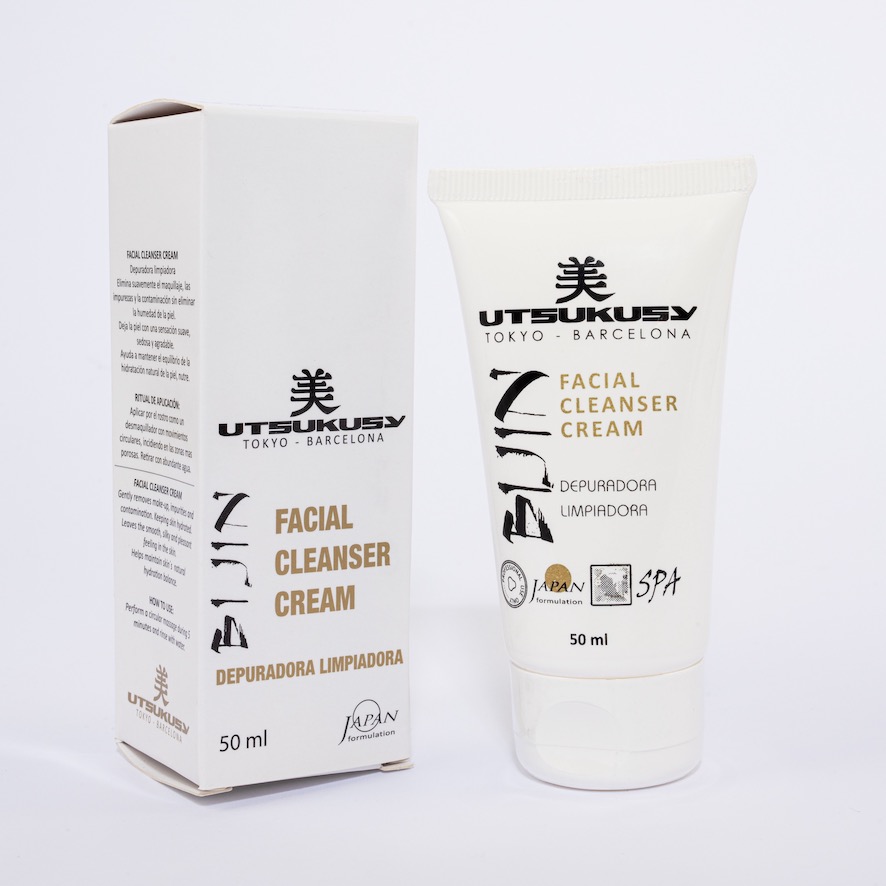
For daily facial cleansing Bijin Facial Cleansing Cream from Utsukusy Cosmetics
Micellar water
Micellar water - the all-rounder for facial cleansing
Micellar water is a versatile product that has become increasingly popular in recent years.
It cleanses the skin intensively and removes make-up and dirt particles at the same time.
Find out more about the benefits and use of micellar water.
Benefits of micellar water
Micellar water contains tiny micelles that act like magnets, attracting impurities, excess oil and make-up residue.
As micellar water is both hydrophilic and lipophilic, you can use it to remove a wide variety of impurities.
It is gentle on the skin and often leaves it feeling refreshed.
How to use micellar water
To use micellar water, apply it to a cotton pad and wipe it over your face.
You can use it both morning and night to cleanse and refresh your skin.
Rinsing is not necessary unless you personally prefer to do so.
Depending on your cleansing routine, you can use the micellar water after the Basic Line cleansing milk or after the cleansing cream.
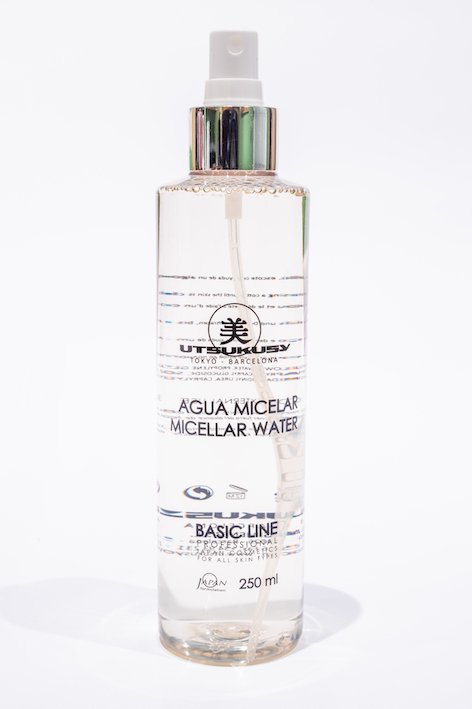
Micellar water from Utsukusy Cosmetics
Conclusion - facial cleansing
A thorough cleansing routine is crucial for healthy and radiant skin.
Make-up remover, micellar water, cleansing milk and cleansing cream are great products to rid your skin of dirt and excess oil.
Choose the product that best suits your skin and integrate it into your skincare routine. This will lay the foundation for a radiant and healthy glow.
Don't forget to establish a regular skincare routine and look after your skin to achieve the long-term results you want.
Good to know:
The optimal daily cleansing routine for your facial skin: Tips and tricks for healthy and radiant skin
In this short guide, we will look at the optimal cleansing routine for your facial skin.
The importance of a daily facial cleansing routine
A daily facial cleansing routine is crucial for the health and beauty of your skin.
Throughout the day, dirt, bacteria, excess oil, dead skin cells and other impurities accumulate on the skin's surface.
If these are not completely removed, they can clog pores and lead to skin problems such as acne, blackheads and a dull complexion.
In addition, insufficient cleansing can also lead to premature skin ageing.
Dirt and impurities can damage skin cells and promote oxidative processes that can lead to wrinkles, fine lines and an uneven skin tone.
A cleansing routine helps to rid the skin of these deposits and prepare it to absorb moisture and nourishing active ingredients.
This allows skincare products to work better and the skin to maintain its natural balance and radiance.
Benefits of an optimal facial cleansing routine
An optimal facial cleansing routine offers numerous benefits for your skin health and radiance:
- Improved skin texture: regular cleansing removes dead skin cells and refines skin texture. The result is smoother and more supple skin.
- Reduced impurities: A thorough cleanse helps to eliminate excess oil, dirt and bacteria that can lead to acne, blackheads and other impurities. This results in clearer and cleaner skin.
- Pore refinement: Clogged pores can lead to enlarged and visible pores. An effective cleansing routine helps to unclog them and reduce their size, resulting in a smoother complexion.
- Fresh feeling skin: Facial cleansing not only removes impurities but also revitalises the skin, leaving it feeling refreshed and revitalised.
- Maximising the effectiveness of skincare products: Cleansed skin is better able to absorb the active ingredients from serums, creams and other skincare products.
By prioritising your facial cleansing routine, you can increase the effectiveness of your subsequent skincare steps.
Step-by-step guide for optimal facial cleansing
Step 1: Make-up removal
The first step of an effective facial cleansing routine is the thorough removal of make-up.
It can clog pore openings and impair skin respiration, so it is important to remove it completely at the end of the day.
There are various products available to remove it, such as make-up remover, cleansing oils or cleansing wipes.
Choose a product that suits your skin and the make-up products you use.
Apply the make-up remover to a cotton pad or cleansing cloth and use it to cleanse your face, eye area and neck.
Repeat this step as necessary until your face is free of make-up.
Step 2: Facial cleansing with micellar water
After the first cleansing step, micellar water is an excellent product to further remove excess oil, dirt and residue from the skin.
Micellar water contains tiny micelle molecules that act like magnets and absorb dirt particles.
Apply a small amount of micellar water to a cotton pad and wipe over your face to remove dirt and debris.
If you use cleansing milk and/or facial cleansing cream after the 1st cleansing step, you should use the micellar water afterwards to remove the residue.
Step 3: Facial cleansing with cleansing milk and/or cleansing cream
Cleansing milk is another product that can be used in the facial cleansing routine.
It is particularly suitable for dry or sensitive skin as it is gentle and moisturising.
Apply a small amount to your face and massage it in gently.
Then rinse off with lukewarm water to remove any residue.
Make sure that no residue remains on the skin to avoid irritation.
Step 4: Facial cleansing cream
A cleansing cream is a richer option. It is particularly suitable for dry or mature skin.
It often contains nourishing ingredients such as oils or moisturising substances.
Apply a small amount of cleansing cream to your face and massage it in gently.
Then rinse it off with lukewarm water to remove any residue.Make sure that no residue of the cleansing cream remains on the skin to ensure a clean and fresh skin feeling.
Before cosmetic treatments such as microneedling, both the cleansing milk and the facial cleansing cream are often used afterwards so that the active ingredients used in a microneedling treatment can be absorbed particularly well by the skin.
Step 5: Toning toner
Once you have thoroughly cleansed your face, the next step is to apply a toning toner.
Toner is an important part of the facial cleansing routine as it clarifies and refreshes the skin and prepares it for subsequent skincare.
Toners are available in different variants, such as alcohol-free formulas, those with soothing or mattifying properties or those that are specially tailored to specific skin needs.
After completing your cleansing routine, apply the toner to a cotton pad and gently smooth over your face.
Make sure to also cover the areas around the nose, hairline and chin to remove any residue.
Toning with toner offers several benefits.
- It helps to shrink skin pores and reduce the appearance of blackheads and blemishes.
- It also removes the last residues of cleansing products and leaves the skin feeling fresh and clean.
- It restores the skin's natural pH value, which can be influenced by cleansing.
A balanced pH value is important to protect the skin barrier and ensure the optimum effect of subsequent skin care products.
When choosing a toner, it is important to consider the needs of your skin.
If you have sensitive skin, choose an alcohol-free and mild toner that contains soothing ingredients such as camomile or aloe vera.
For oily or acne-prone skin, products with astringent or mattifying properties can be beneficial to control excess oil and reduce shine.
If you have dry or mature skin, choose a product that contains moisturising ingredients such as hyaluronic acid or rose water to hydrate and nourish the skin.
Toning should be done in the morning and evening after cleansing.
It's a simple and effective step that gives your skin an extra boost of freshness and prepares it for subsequent skincare.
Remember that toner is not a substitute for cleansing, but a supplement to thoroughly clarify and refresh the skin.
Combine it with a gentle cleansing method and the right products for your skin to achieve optimal results.
Toning is another important step in your facial cleansing routine that will help keep your skin healthy, radiant and in top condition.
Add this step to your routine and you will notice the positive effects on your skin.
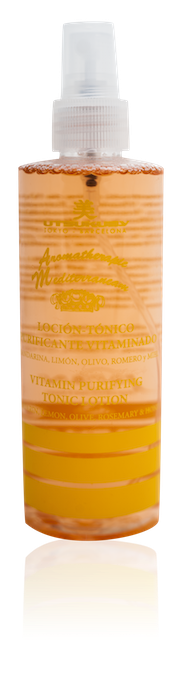
Toner: Vitamin Toner Lotion from Utsukusy Cosmetics
Step 6: Exfoliation for a thorough cleanse
The exfoliation step is an important part of the facial cleansing routine as it removes dead skin cells and refines the skin's texture.
There are two common types of exfoliation: chemical exfoliation and mechanical exfoliation.
Chemical exfoliation
Chemical exfoliation uses special ingredients such as alpha hydroxy acids (AHA), beta hydroxy acids (BHA) or enzymes to gently dissolve dead skin cells.
These ingredients penetrate the top layer of the skin and remove dead cells without the need for manual friction.
AHA peels, such as glycolic acid or lactic acid, are particularly suitable for dry or sensitive skin as they can gently exfoliate and hydrate the skin at the same time.
BHA peels, such as salicylic acid, are more effective in treating oily or acne-prone skin as they can penetrate deep into the skin pores and unclog them.
Chemical exfoliation should be used carefully to avoid potential skin irritation.
It is important to follow the manufacturer's instructions and not leave the scrub on the skin for too long to prevent over-exfoliation or redness.
When finished, a soothing moisturiser should be used to nourish and protect the skin.
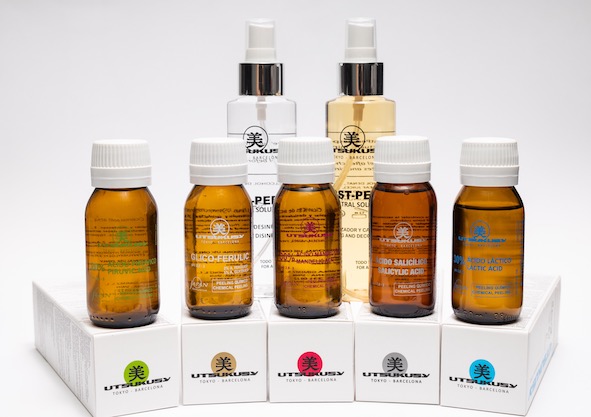
Professional facial cleansing or facial treatment with chemical peels from Utsukusy Cosmetics
Mechanical peeling
In contrast to chemical exfoliation, mechanical exfoliation (scrub) uses small particles or granules to mechanically remove dead skin cells from the skin's surface.
This can take the form of abrasive particles, brushes or sponges.
Scrubs are usually a little more intense than chemical exfoliants and are particularly suitable for oily or robust skin.
They can help to loosen blockages and refine the skin's texture.
However, it is important to use mechanical exfoliants with caution, as too much friction can irritate or even injure the skin.
No pressure should be applied when scrubbing and it is advisable to follow the manufacturer's instructions for use.
Avoid using the scrub too often as this can lead to over-irritation.
A soothing moisturiser should be applied after the scrub to soothe and protect the skin.
It is important to note that not every skin type is suitable for all types of scrubs.
Dry or sensitive skin can be irritated by over-exfoliation, while oily skin may benefit from a more thorough exfoliation.
Therefore, make sure to choose an exfoliator that suits your skin type and needs.
Exfoliation should be included in your facial cleansing routine once or twice a week, depending on your skin type and tolerance. It is advisable to exfoliate in the evening to give the skin time to regenerate overnight.
When using professional chemical peels, the intervals between peeling treatments are longer.
Exfoliation is an important step in removing dead skin cells and refining the skin's texture.
It promotes cell renewal and enables better absorption of skin care products.
Choose the right product for your skin and use it in moderation to achieve the best results and avoid skin irritation.
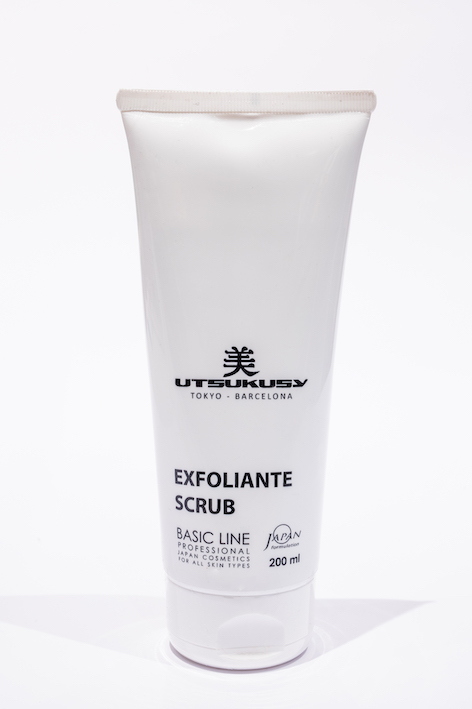
Facial cleansing with Basic Line Scrub from Utsukusy Cosmetics
Step 7: Moisturising and sun protection after facial cleansing
After exfoliating, it is important to moisturise your skin and protect it from harmful UV rays.
This step involves applying a moisturiser and sunscreen.
Moisturising
Moisturising is a crucial step in the facial treatment to provide the skin with the necessary moisture and strengthen its natural barrier.
Moisturisers contain ingredients such as hyaluronic acid, glycerin and ceramides that bind them and hydrate the skin.
Choose a moisturiser that is tailored to your skin type and individual needs.
For dry skin, you can choose a richer cream that provides intensive care and long-lasting moisture.
For oily skin, lighter formulations or even moisturising gels that do not over-grease the skin are suitable.
Apply the moisturiser to a cleansed face and massage it in using circular movements. Make sure not to neglect the neck and décolleté.
Regular use of a moisturiser helps to reduce dryness, tightness and rough patches of skin.
It improves skin elasticity and gives you a radiant complexion.
Apply moisturiser in the morning and evening to keep your skin hydrated around the clock.
Sun protection
Sun protection is an essential step in facial care as it protects the skin from the harmful effects of UV rays.
Sun exposure is one of the main factors in premature skin ageing, sunburn and the risk of skin cancer.
Choose a sunscreen with an appropriate sun protection factor (SPF) according to your skin type and the conditions you are in.
For daily use, a sunscreen with an SPF of at least 30 is recommended.
After cosmetic treatments such as microneedling or chemical peeling, you should definitely use a sunscreen with SPF 50+.
Note that sun protection is also necessary on cloudy days and in winter, as UV rays can still reach the skin.
Apply the sunscreen generously to the entire face, neck and ears and massage it in gently.
Make sure not to forget sensitive areas such as the nose, cheekbones and forehead.
Sunscreen should be applied in the morning as the last step in your facial care routine before you leave the house.
If you are exposed to the sun for long periods of time, you should reapply sunscreen every few hours, especially after swimming or sweating.
Regular use of a sunscreen helps to minimise sun damage, prevent premature skin ageing and reduce the risk of skin cancer.
It's an important step in keeping your skin healthy, protected and youthful.
By incorporating moisturising and sun protection into your daily facial cleansing routine, you are investing in the long-term health and beauty of your skin.
In addition to the cleansing routine, the occasional use of masks, i.e. facial cleansing masks, is also highly recommended.
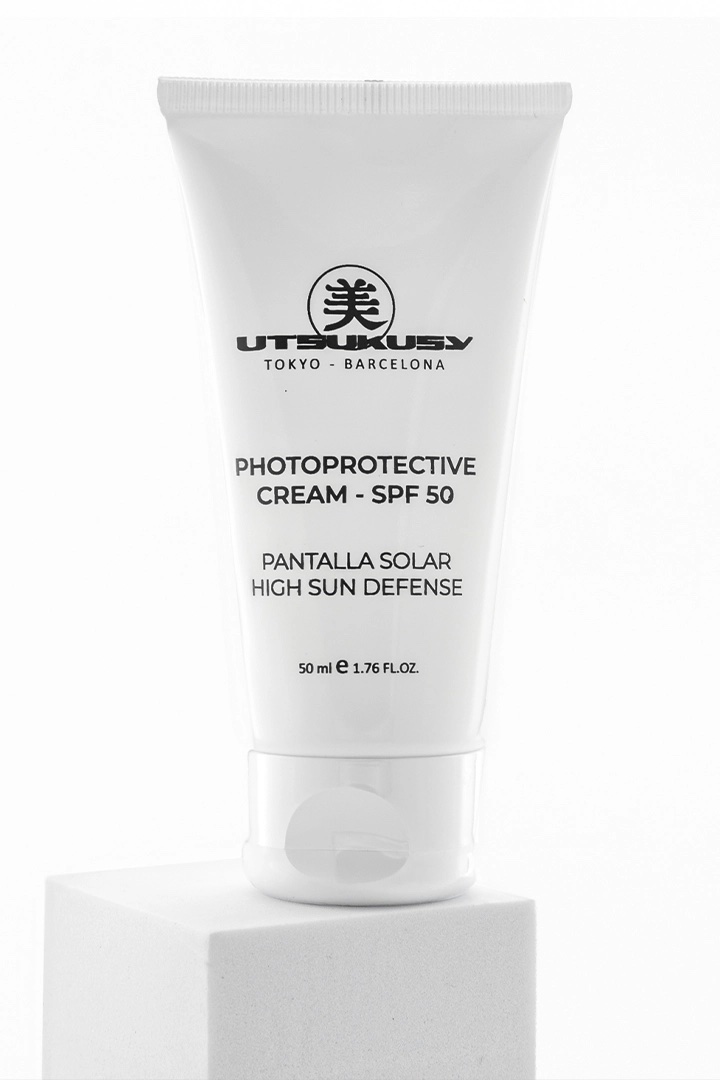
Sun cream with SPF 50 for all skin types from Utsukusy Cosmetics
Skin types and the right facial cleanser
Dry skin
Dry skin tends to retain less moisture and can easily become rough, flaky and sensitive.
Gentle and moisturising facial cleansing is crucial to protect the skin's natural moisture barrier and minimise moisture loss.
Here are some tips and recommendations for facial cleansing for dry skin:
- Use mild cleansing products: Choose a cleansing milk or facial cleansing cream that is free from irritating ingredients such as alcohol or strong fragrances. These products effectively cleanse the skin without further drying or irritating it.
- Look for moisturising ingredients: Look for products that contain moisturising ingredients such as hyaluronic acid, glycerin or aloe vera. These ingredients help to bind moisture in the skin and reduce moisture loss.
- Avoid hot water: Wash your face with lukewarm water instead of hot water, as hot water can dry out the skin. Also avoid excessive rubbing or leaving cleansing products on for too long to avoid irritation.
- Use gentle cleansing methods: Use your hands or a soft, clean washcloth to cleanse the face. Avoid harsh brushes or sponges that could further irritate the skin.
- Supplement with moisturising toners: After cleansing, you can use a moisturising toner to soothe and moisturise the skin. Make sure to choose an alcohol-free toner to avoid drying out the skin.
- Finish with a moisturiser: After cleansing, apply a rich moisturiser. Choose a cream with moisturising and nourishing ingredients that suit your skin type.
- Exfoliate with care: If you have dry skin, exfoliate gently. Use mild exfoliants with fine particles to remove dead skin cells. Don't overdo it with exfoliation to avoid irritation and additional moisture loss.
- Drink enough water: In addition to external care, it is important to drink enough water to moisturise the skin from the inside.
Keep in mind that everyone is individual and may require different products and routines to meet the needs of their dry skin.
It may be helpful to consult a skincare expert to develop a customised facial cleansing routine that is best suited to your dry skin.
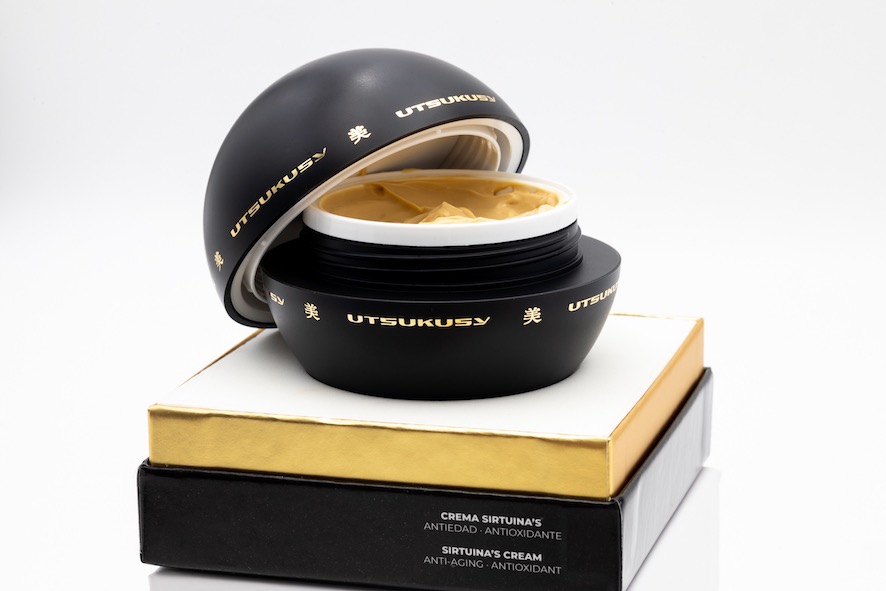
Sirtuinas Cream fordry and mature skin from Utsukusy Cosmetics
Oily and blemish-prone skin - exfoliation can help
Oily skin tends to produce excess sebum, which can lead to an oily sheen, enlarged pores and pimples and blackheads.
Thorough yet gentle facial cleansing is crucial to remove excess oil, clear pores and combat blemishes.
Here are some tips and recommendations for facial cleansing for oily skin:
- Use a suitable cleansing product: choose a cleansing product specifically designed for oily skin. A cleansing milk or cleansing gel with ingredients such as salicylic acid, tea tree oil or witch hazel can help remove excess oil and cleanse the skin pores.
- Wash your face twice a day: cleanse your face thoroughly in the morning and evening to remove dirt, sebum and dead skin cells. However, avoid over-washing your face as this can stimulate the skin to produce even more oil.
- Gently massage in cleansing products: Massage the cleanser into the skin using circular motions. Be careful not to rub too hard as this can irritate the skin and lead to even more oil production.
- Look for non-comedogenic products: Don't use heavy or greasy creams or lotions that could clog pores. Instead, choose moisturising products that are labelled 'non-comedogenic', which means they won't clog pores.
- Use toner for deep cleansing: After cleansing, you can use a toner that is specifically formulated for oily skin. A toner with astringent ingredients such as witch hazel or tea tree oil can help shrink skin pores and control excess oil.
- Exfoliate regularly: Oily skin tends to collect dead skin cells that can clog pore openings. Regular exfoliation helps to remove these dead skin cells and keep the skin fresh and clear. Use a mild exfoliant with salicylic acid or fruit acids once or twice a week to clarify the skin.
- Use non-comedogenic, lightweight moisturisers: Although oily skin is already oily, it still needs moisture to stay balanced and healthy. Choose a lightweight, non-comedogenic moisturiser that hydrates without clogging pores.
- Avoid touching your face frequently: Avoid touching your face frequently with your hands as this can transfer extra oil and bacteria to the skin, which can lead to blemishes.
It's important to be patient and find the right balance in facial cleansing to keep oily skin at bay.
However, if you continue to have problems with blemishes, it may be helpful to consult a skincare professional who can offer personalised recommendations and treatment options.
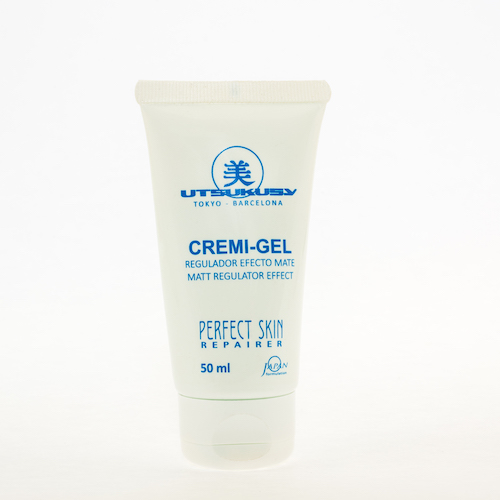
Cremi Gel Cream for oily skin from Utsukusy Cosmetics
Sensitive skin
Sensitive skin often reacts particularly sensitively to external stimuli and is prone to redness, irritation and dryness.
When cleansing the face, it is important to use gentle and soothing products to protect the skin and avoid irritation.
Here are some tips and recommendations for facial cleansing for sensitive skin:
- Avoid irritating ingredients: make sure to choose cleansing products that are free of strong fragrances, alcohol, parabens and other potentially irritating ingredients. Such ingredients can further irritate the skin and lead to redness and dryness.
- Choose mild cleansing products: Opt for mild cleansing products such as gentle cleansing milk or cleansing gel that have been specially developed for sensitive skin. These products gently cleanse the skin without damaging the natural moisture barrier.
- Test the products: Before you apply a new cleansing product to your entire face, you should perform a patch test. Apply a small amount of product to the inside of your forearm and observe the skin's reaction for at least 24 hours. If there is no redness, itching or irritation, the product is probably safe for your sensitive facial skin.
- Use lukewarm water: Rinse your face with lukewarm water to avoid irritation. Hot water can dry out the skin and increase redness.
- Cleanse: Gently cleanse your face by applying the cleanser to your skin using light, circular motions. Avoid excessive rubbing or pulling to prevent irritation.
- Avoid washing too often: Don't cleanse your face too frequently as this can strip away the skin's natural oils and cause dryness. Once or twice a day is usually sufficient.
- Avoid rough materials: When drying your face, use a soft towel or gently pat your skin dry. Avoid rough materials or rubbing too hard to minimise irritation.
- Moisturising care: Use a light, moisturising face cream or lotion specially formulated for sensitive skin. Choose products with soothing ingredients such as chamomile, oat extract or aloe vera to hydrate and soothe the skin.
- Don't forget sun protection: Sensitive skin is particularly susceptible to sun damage. Therefore, use a sunscreen with an appropriate SPF every day to protect the skin from UV rays and reduce redness.
- Consult a dermatologist: If you have severe sensitivities or persistent skin problems, it is advisable to see a dermatologist. A specialist can analyse your skin individually and recommend the best facial cleanser for your sensitive skin.
It's important to understand the needs of your sensitive skin and choose the right products to avoid irritation and keep your skin healthy and balanced.
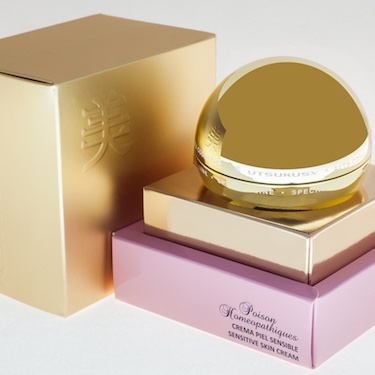
Couperose cream for sensitive skin from Utsukusy Cosmetics
The role of diet and lifestyle factors
The role of diet and lifestyle factors in facial cleansing and overall skin health should not be underestimated.
A healthy diet and lifestyle can help support the skin from the inside out and improve the effectiveness of external facial cleansing.
Here are some important aspects to consider:
- Hydration: drinking enough water is crucial to keep skin moisturised and healthy. Adequate hydration helps to flush toxins from the body and improve skin elasticity.
- A diet rich in antioxidants: A diet rich in antioxidants can help protect the skin from free radical damage. Include plenty of fruit, vegetables, nuts and seeds in your diet. Examples of foods rich in antioxidants are berries, green leafy vegetables, avocados and nuts.
- Omega-3 fatty acids: Omega-3 fatty acids, found in fatty fish such as salmon, flaxseed, chia seeds and walnuts, can have anti-inflammatory properties and contribute to skin health. They help to moisturise the skin and reduce irritation.
- Avoid highly processed foods: Highly processed foods that are rich in sugar, trans fats and artificial additives can have a negative impact on skin health. Try to avoid such foods and focus on natural, fresh and unprocessed foods instead.
- Stress management: Chronic stress can lead to skin problems such as acne, redness and premature ageing. Find healthy coping strategies to reduce stress, such as regular exercise, relaxation techniques like yoga or meditation and getting enough sleep.
- Get enough sleep: A sufficient amount of sleep is important to promote skin regeneration. During sleep, the skin recovers and regenerates itself, so it is important to get enough rest and sleep.
- Reduce smoking and alcohol consumption: Smoking and excessive alcohol consumption can dry out the skin, lead to inflammation and cause premature ageing. To promote skin health, it is advisable to quit smoking and reduce alcohol consumption.
It is important to note that the effects of diet and lifestyle on the skin can be individual.
Everyone reacts differently to certain foods and habits.
It can be helpful to work with a nutritionist or dermatologist to develop a customised diet and lifestyle strategy that contributes to your specific skin health.
An optimal daily facial cleansing routine is crucial for healthy, radiant and nourished skin.
By choosing the right steps and products, you can effectively remove dirt, make-up residue and impurities from your skin. Always consider your individual skin type and its needs.
Complement your cleansing routine with appropriate moisturising and sun protection, as well as a healthy diet and lifestyle.
A consistent and thorough facial cleansing routine will lead to improved skin texture and a fresh skin feeling in the long term.
Use our tips and tricks to develop your optimal cleansing routine and maintain healthy and radiant skin.
Other interesting articles:
- Which cream should I use after microneedling?
- Ampoules for the face - which facial ampoules are the right ones?
- Retinal or rather retinol?
- The role of hyaluronic acid (hyaluron) in microneedling: more than just a trend
- Microneedling treatment with Dermaroller or Dermapen | Instructions from A - Z
- Niacinamide - Vitamin B3 | Power ingredient in skin care